
Fence Options
Split Rail Fencing
Classic split rail fencing for properties throughout Delaware and surrounding areas. A timeless, versatile option for defining boundaries while maintaining an open, natural look.
Why Choose It
Built for Open Spaces
Split rail fencing defines boundaries without closing off the view. Its open design works well for yards, property lines, driveways, entrances, and decorative perimeter fencing.
Natural Look
A timeless fence style that complements a wide range of landscapes and properties.
Clear Boundaries
Define property lines, guide traffic flow, and frame outdoor spaces without creating a heavy visual barrier.
Versatile Options
Add welded wire when additional containment is needed while maintaining the traditional split rail appearance.
Professional Installation
Our team can assist with layout considerations, post spacing, and terrain adjustments, then provide professional installation for a clean, secure finished fence.
Applications
Where Split Rail Works Best
Split rail fencing is a versatile choice for defining boundaries while maintaining an open, natural appearance.
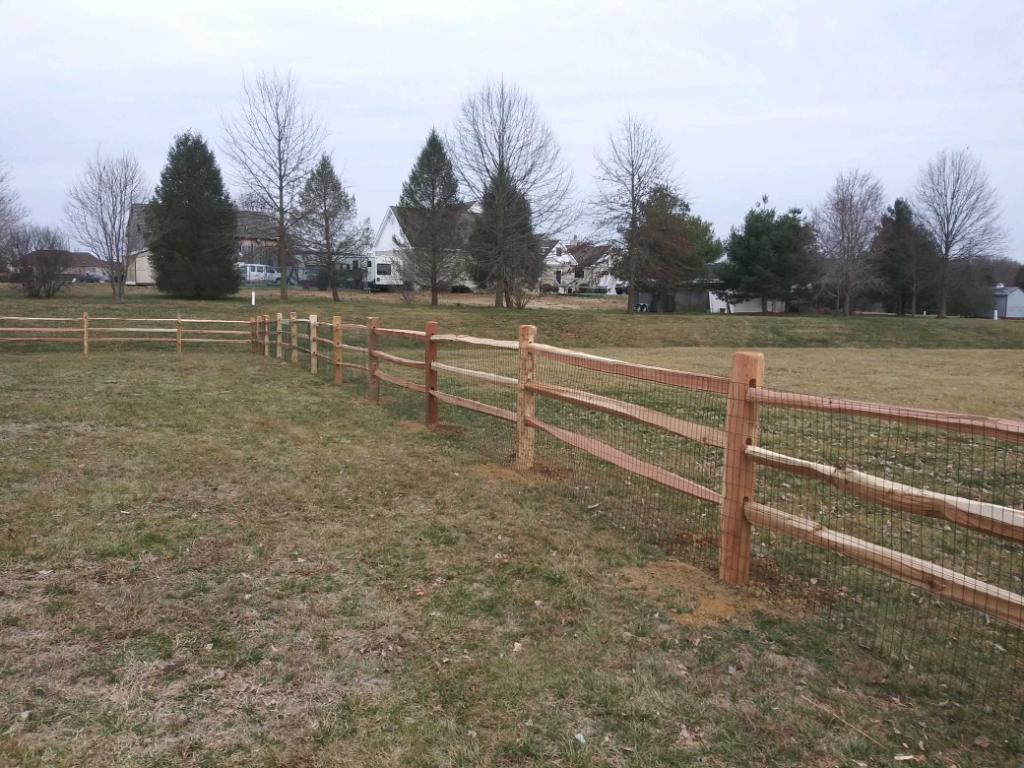
Property Boundaries
Define property lines, yards, driveways, and other areas while maintaining an open, natural look.
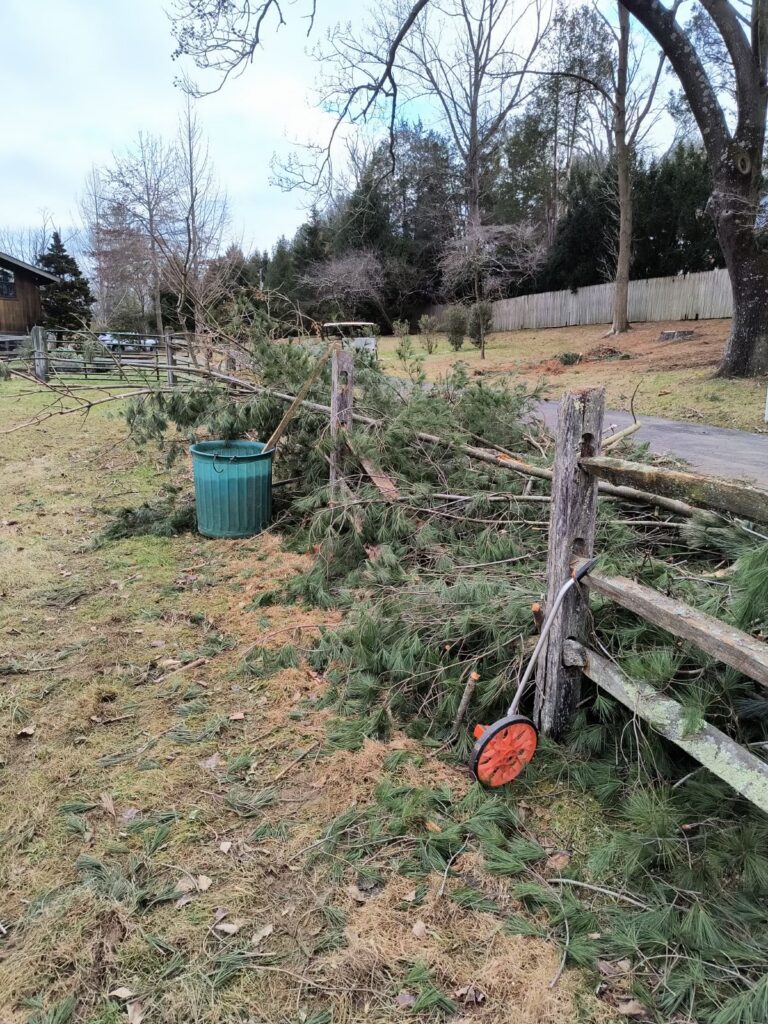
Repairs and Replacements
Replace damaged rails, reset leaning posts, and repair aging sections to help extend the life of your existing fence.
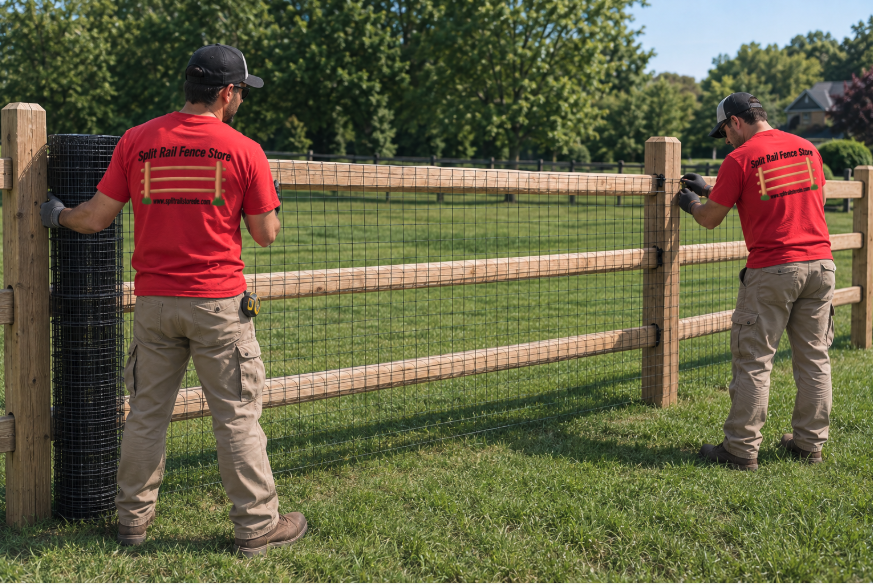
Containment Options
Add welded wire when additional containment is needed while maintaining the traditional open look of split rail fencing.
Split Rail FAQ
Answers to common questions about split rail fencing, installation, repairs, and material options.
Is split rail good for large properties?
Yes. Split rail works well for long fence lines and larger properties because it clearly defines boundaries while maintaining an open appearance.
Can split rail work on uneven ground?
Yes. Split rail can accommodate many grade changes and uneven areas while following the natural terrain.
Does split rail provide privacy?
No. Split rail is designed for boundary marking and appearance rather than full privacy. If privacy is the goal, wood or vinyl may be a better fit.
Can damaged rails be repaired?
In many cases, yes. Individual rails and posts can often be replaced without replacing the entire fence, depending on its condition.
Can welded wire be added to split rail fencing?
Yes. Welded wire can be added for additional containment while maintaining the open, traditional appearance of split rail fencing.
How do I get pricing?
Request an estimate and tell us about your project. We’ll gather the information needed and provide pricing based on your fence style, materials, gates, and other project requirements.
Split Rail Fence Styles
Traditional Split Rail
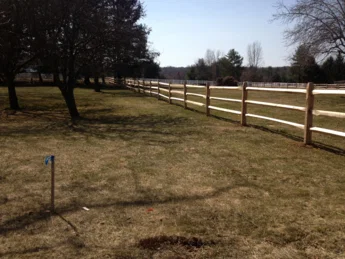
Classic split rail fencing available with your standard rail and post options, with welded wire available for additional containment.
Western Red Cedar
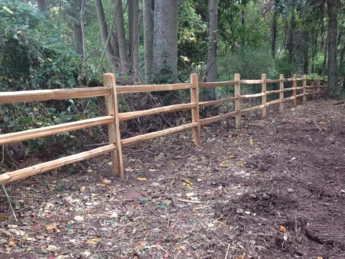
Natural cedar split rail fencing offering a distinctive wood appearance
White Round Cedar
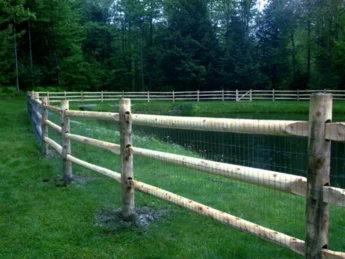
Round cedar rails and posts for a more uniform, finished appearance.
Slip Board
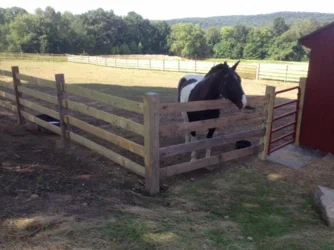
Board-and-post fencing ideal for larger properties, agricultural applications, livestock areas, and long fence lines.
Snake Rail Fencing
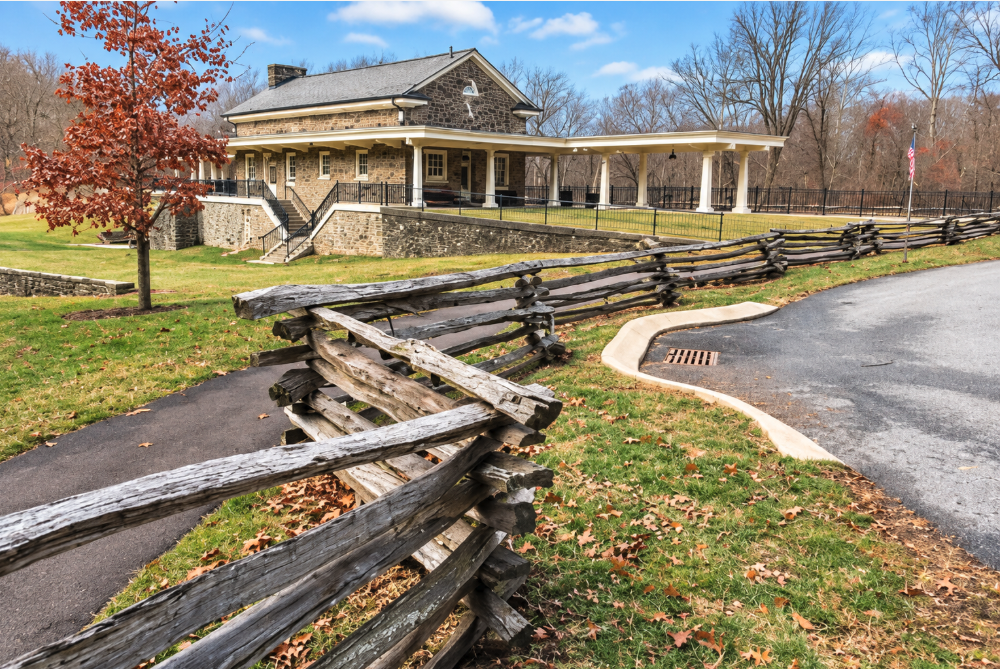
Snake rail fencing is one of the earliest styles of split rail fence in America, with a distinctive stacked, zigzag design commonly associated with historic properties and early American landscapes.
Unlike traditional post-and-rail fencing, snake rail fence does not require posts or holes to be dug. The rails are stacked and overlapped at an angle, creating a freestanding fence that follows the natural contour of the property.
We offer snake rail fencing in Western Red Cedar and pressure-treated wood. Western Red Cedar provides a more traditional, rustic appearance, while pressure-treated rails offer another durable option for residential, agricultural, and decorative applications.
Typical Rail Configurations
3′ high — 5 rails per section
3½’ high — 6 rails per section
4′ high — 7 rails per section
For estimating purposes, allow approximately 7 linear feet per section to account for the angle and overlap of the rails. Full-size cross braces can also be added for a more traditional appearance.
No posts. No digging. A classic American fence style with a look all its own.